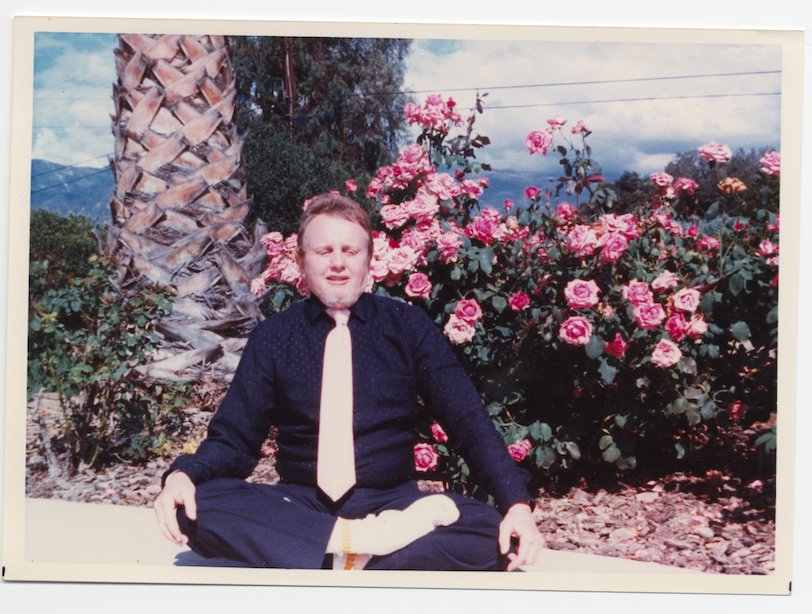
Queer Archives and Buddha Bodies
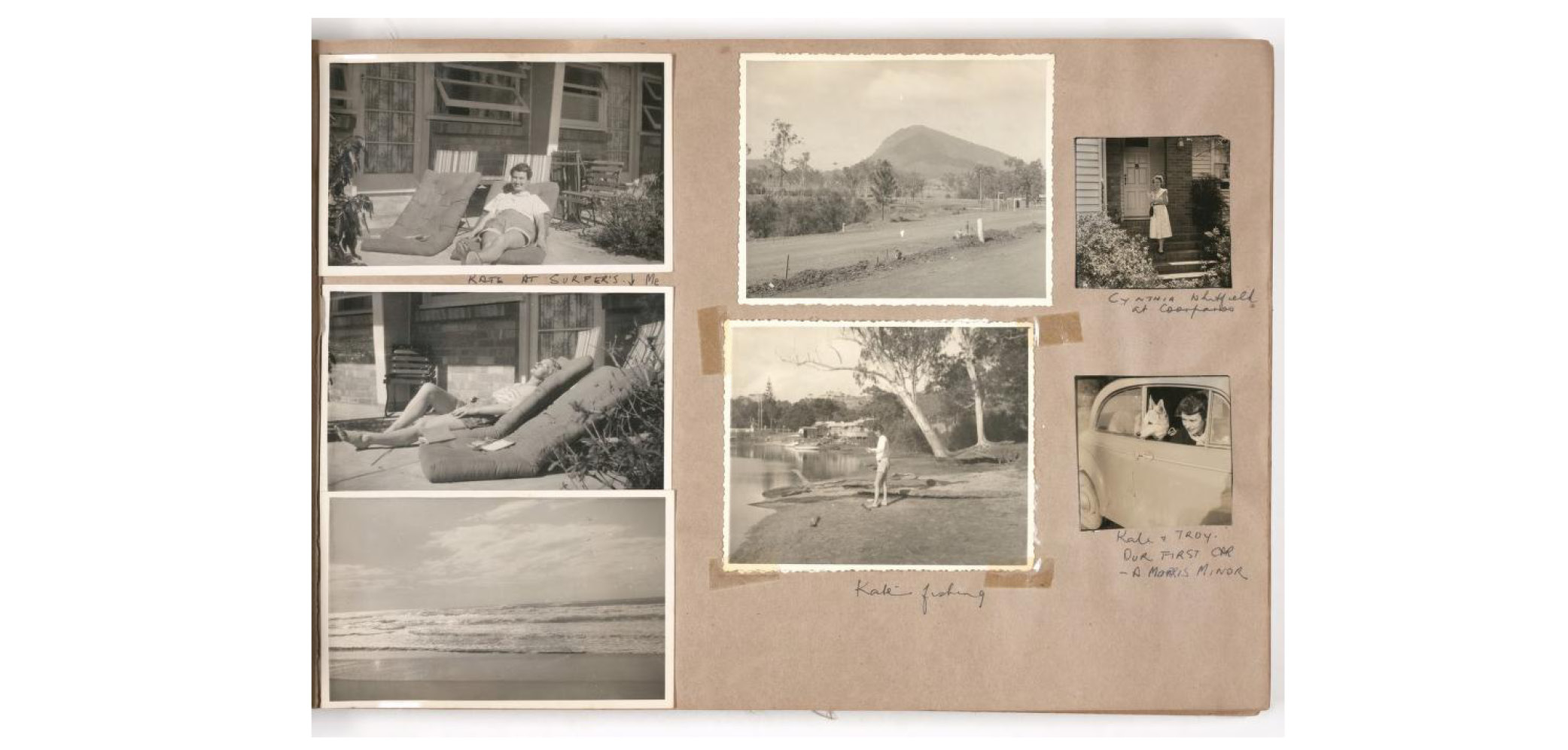
Presentations by two art history PhD candidates. Aiden Magro introduces his research into Australia's queer "grassroots archivists”, while Ruihan Ma explores subjectivity and modernity in the work of contemporary Tibetan artist Gade.
Aiden Magro
Grassroots Archivists: Photo Albums from the Queer Archives
Often dismissed as a banal, domestic objects, photo albums have quietly preserved histories otherwise absent from the archives. As queer activists around the world began to imagine queer archives as spaces which could sustain their burgeoning liberation movements, photo albums offered an accessible means through which queer people could record their histories visually when traditional archives refused to do so. From the photo album of editor of Australian House and Garden magazine Beryl Guertner (1948-1956) to gay photojournalist John Jenner’s Death of Friend photo diary (1986-1990), this paper considers a series of photo albums belonging to what I term “grassroots archivists”: ordinary queer people who had the initiative to keep photo albums not only for their nearest and dearest but for future generations of queer people. Drawing on my encounters with personal photographic keepsakes as historical documents and on oral histories recorded with the grassroots archivists responsible for their making and preservation, I reflect on the importance, now more than ever, of photo albums to our queer archives.
Ruihan Ma
Gade’s “Buddha Bodies”: Modernity within the River of Impermanence in Contemporary Tibet
This paper investigates how contemporary Tibetan subjectivity is reconfigured through the “Buddha bodies” in the works of Gade (b. 1971), a leading contemporary Tibetan artist in China. Here, “Buddha bodies” refer not to historical Buddha images, but to the Buddha appearing as volatile bodies situated within the cyclical formations and dissolutions of being.
Through an intense focus on the formal exteriority of the Buddha, Gade displaces traditional Buddhas with pop cultural iconographies and semi-human bodies that blur into an archaic, mural-like painterly effect, whilst experimenting with materials that (de)construct the Buddha. These unsettled “Buddha bodies” mediate and are inscribed by the Tibetan lived realities, in which tradition, religion, urbanisation and globalisation entangle, hybridise, and ultimately dissolve into each other. As his Buddhas, though infused with contemporary mantras, still radiate a theological and transcendental aura, Gade remarked to me, “Might we dream the same dream as a monk did three hundred years ago? Between the contemporary and the traditional, there may be no difference.”
I understand Gade’s artistic attempts as twofold: first, to activate a visually distinct Tibetan register within global modernity; and second, to convey the idea of impermanence, beyond identity as fixation. Against readings of Buddhist imagery as a “logo” for the “brand” of contemporary Tibetan art, this paper proposes that, as sites of metamorphosis, the “Buddha bodies” mute the primacy of physical form to reveal the underlying structure of impermanence, through which worlds are vernacularly perceived and distributed.
Part of the Art History Seminar Series, convened by Mary Roberts, and presented by the discipline of art history at the University of Sydney and the Power Institute.
Join via Zoom
People
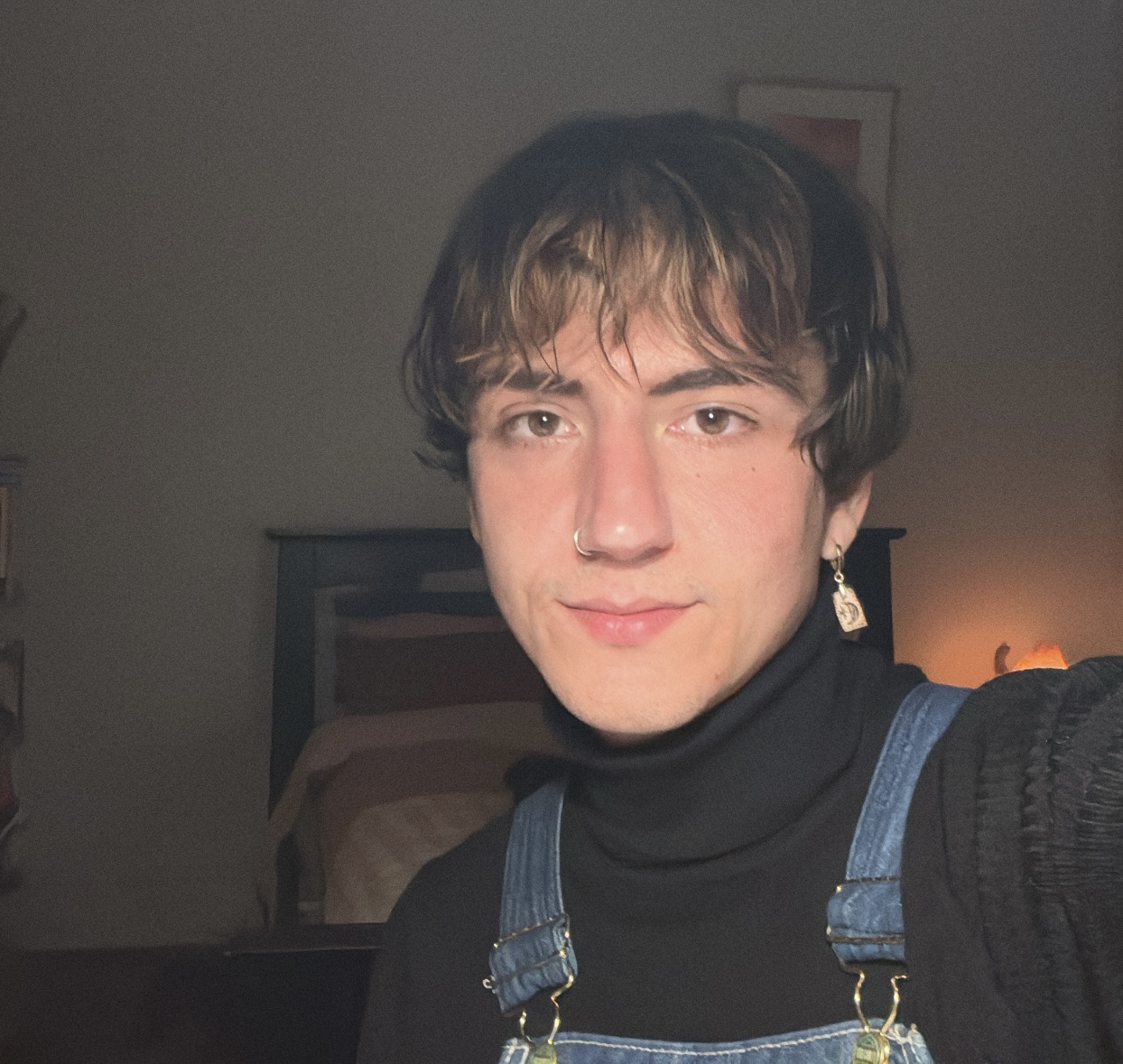
Aiden Magro
Aiden Magro (he/him) is a queer researcher, writer and oral historian living and working on unceded Gadigal land. He received his Bachelor of Arts (First Class Honours) in 2020 and was awarded the University Medal for his honours thesis “Exposing the State: Loo Zihan’s queer performance.” His current research interests include photography, queer art, and archives. Aiden is currently a PhD Candidate in the Art History department at University of Sydney.
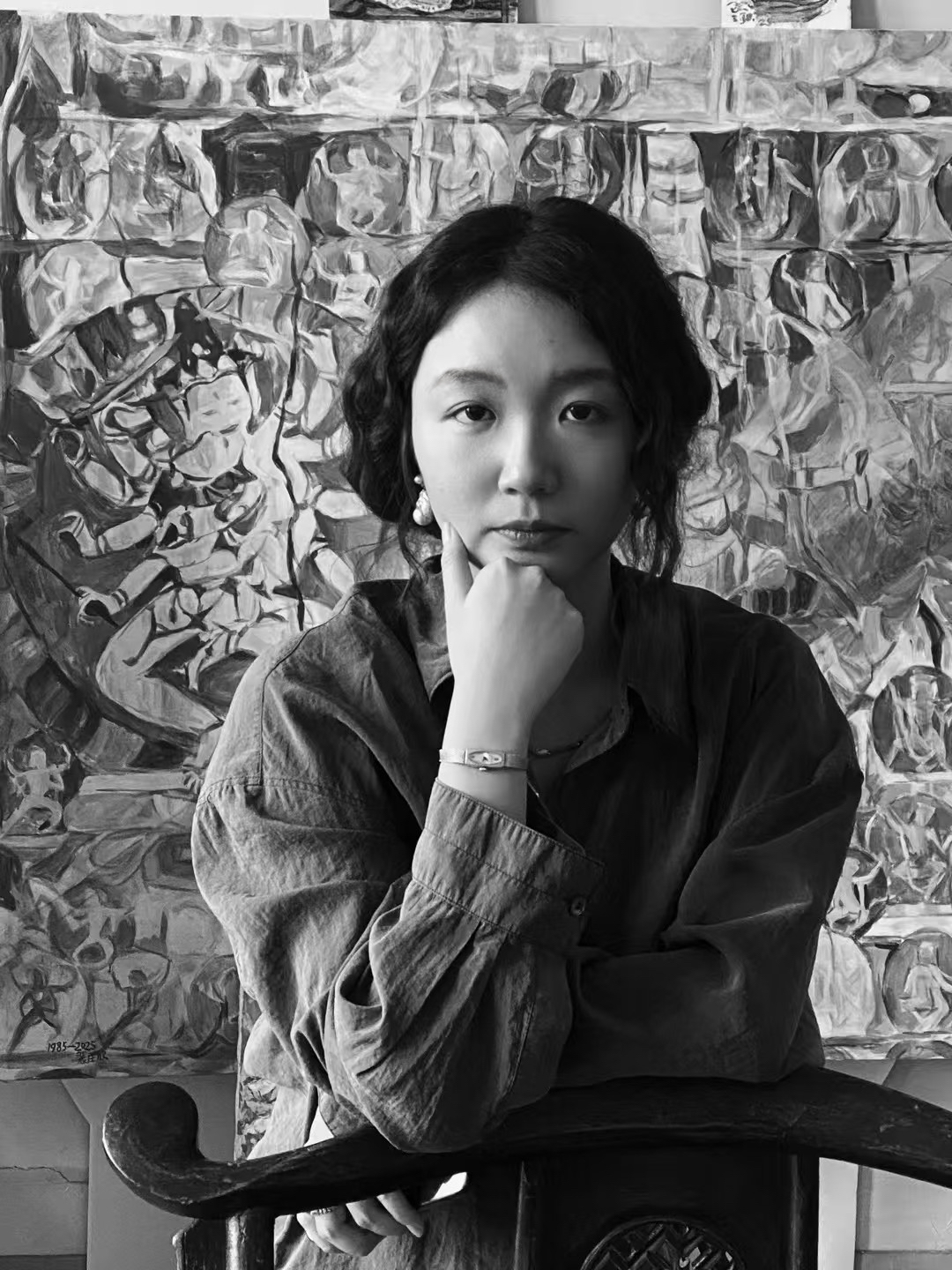
Ruihan Ma
Ruihan Ma is a PhD candidate and tutor in the Department of Art History at the University of Sydney. Her research examines contemporary Tibetan art in China, exploring how artistic practices, emerging beyond institutional centres, reconfigure vision within established visual paradigms under conditions of ontological continuity and shifting religiosity. Her broader interests include heritage sites, artmaking, and artistic organisation arising from geographical, cultural, and religious peripheries – the “small places” – within China. She holds a BA from the Australian National University and an MA from the University of Sydney, where she was awarded the Francis Stuart Prize for the best thesis in Asian art.
Related
Thu, 23 April 2026
3:00PM
Subjectivity, plurality, transparency: Mapping new interpretative norms in Australian and UK exhibition-making
Lilian Cameron