Making the modern Middle East: The new artist-illustrators, 1842-1890
A roundtable on the rise of new illustrated newspapers in the 19th century, and the ways in which urban modernity in the Islamicate world was at the heart of emerging theories of aesthetic modernism in France.
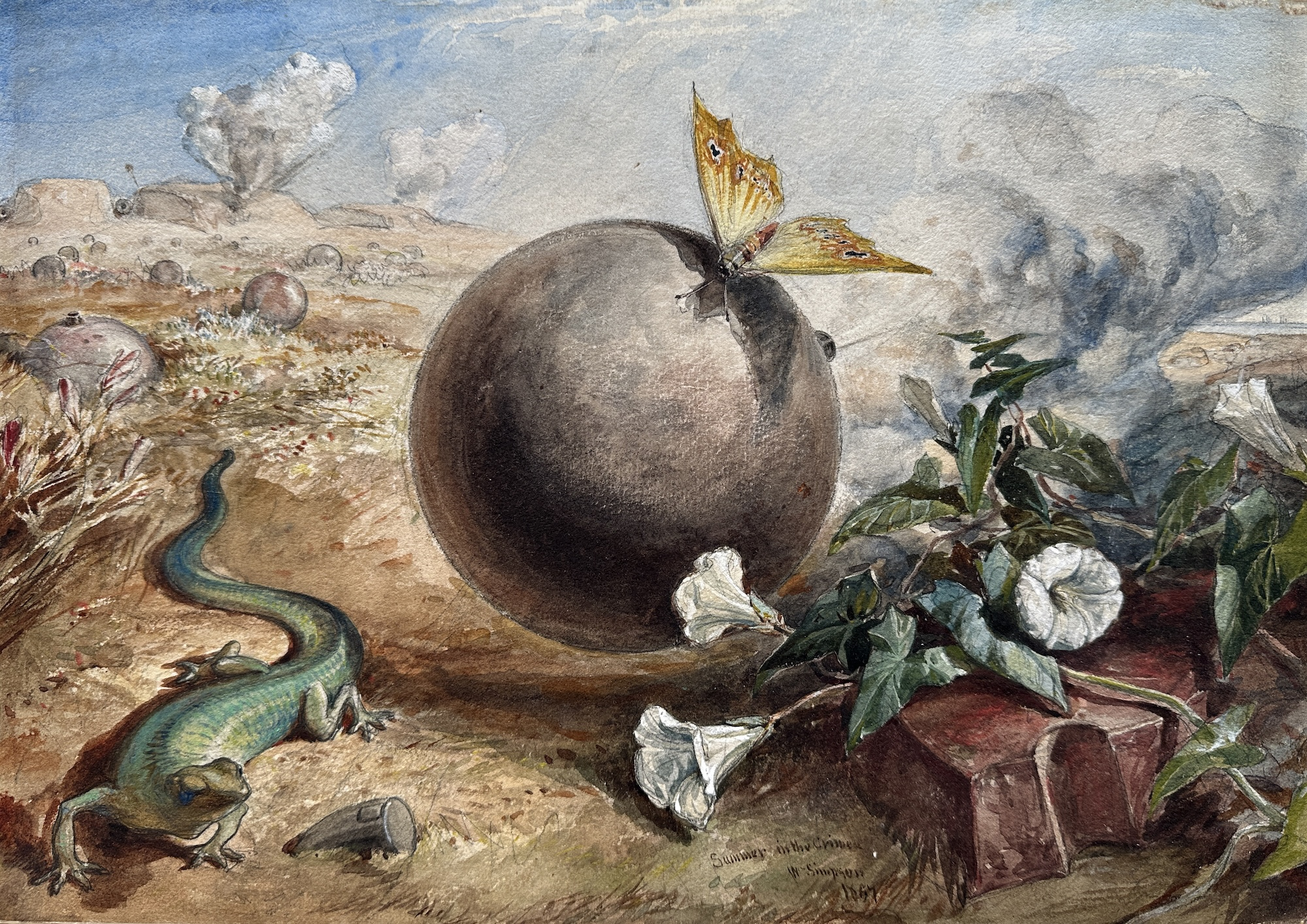
William Simpson, Summer in the Crimea, 1857.
In their earliest years, between 1842 and 1890, editors of the new illustrated newspapers solicited travelling artists who worked between the worlds of high art and the popular press to create drawings on the spot. Funded by the ARC, this project explores the role of drawing as a media technology through a study of major diplomatic events and conflicts in the Middle East and North Africa. It is a geographically expansive study encompassing Russia, Britain, France, the Ottoman Empire, Iran, and Afghanistan. Attending to the cross-cultural work of the artist-illustrators’ reveals the complexities of the modern Islamicate world, and how the representation of this region was mediated through the illustrated press in ways that have shaped lasting global attitudes. The Persian Shahs, Ottoman Sultans, and Egyptian Khedives quickly recognised the power of the illustrated press in promoting their political and economic interests to international audiences. This study will illuminate the ways in which these heads of state and rebel leaders from North Africa to the Caucasus sought to control their representations in the illustrated newspapers. It will also explore the ways in which urban modernity in the Islamicate world was at the heart of emerging theories of aesthetic modernism in France.
In this roundtable three members of the team will be in dialogue about the intellectual ambitions of this project through case studies that exemplify some of its central themes. We look forward to a wide-ranging conversation.
Mary Roberts (Chief Investigator)
Baudelaire’s flâneur is firmly entrenched as a preeminent figure of the Parisian modern artist, but, as Mary Roberts argues, Baudelaire’s artist as convalescent is a less familiar, but no less significant, avatar of modernity who emerges through Guys’ drawings in Istanbul and the Crimea. Attending to the international politics of Guys visual translations, his war reporting emerges as a fulcrum between Baudelaire’s modernism, Victorian news media, and Ottoman statecraft. Modern art, in turn, is rooted in transnational encounter.
Ekaterina Heath (Research Associate)
This talk examines Russian caricatures of the Ottomans during the Crimean War. The conflict triggered a flourishing of the genre once caricature was recognised by the Russian government as a powerful weapon for wartime propaganda. N. A. Stepanov's 1855 album is analysed alongside Nevsky’s drawings and the lubok print tradition, through which the figure of the Turk emerges as an unstable type: by turns a credulous ally duped by his Anglo-French "friends," and, in sharper political sheets, a cynical strategist who bends the allies' rhetoric of civilisation and barbarism to his own ends.
Lucy Pittman (Research Associate)
Lucy Pittman will explore the role of the Illustrated London News’ “Special Artist” in representing the work of the Afghan Boundary Commission as it sought to tour and map the limits of the Russian and British Empires in Afghanistan in 1884-1885. It will explore how portraits, landscapes, and various forms of collaboration and exchange with local officials and elites produced a “worlding” of a contested frontier zone that lay at a confluence of cultures and empires.
Part of the Art History Seminar Series, convened by Mary Roberts and Nick Croggon, and presented by the Power Institute and the discipline of art history at the University of Sydney.
Join via Zoom
People
Mary Roberts
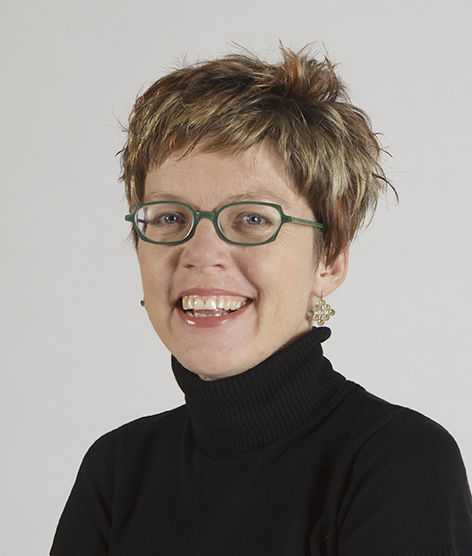
Mary Roberts is Professor of Art History and Nineteenth-Century Studies at the University of Sydney. Working at the intersection of modernism and orientalism, she traces the global networks that inform European and Islamic art. Her next book, Four Thresholds: Modernity, Islamic Art, and the Orientalist Interior, is forthcoming with the University of Chicago Press in April 2027.
Ekaterina Heath
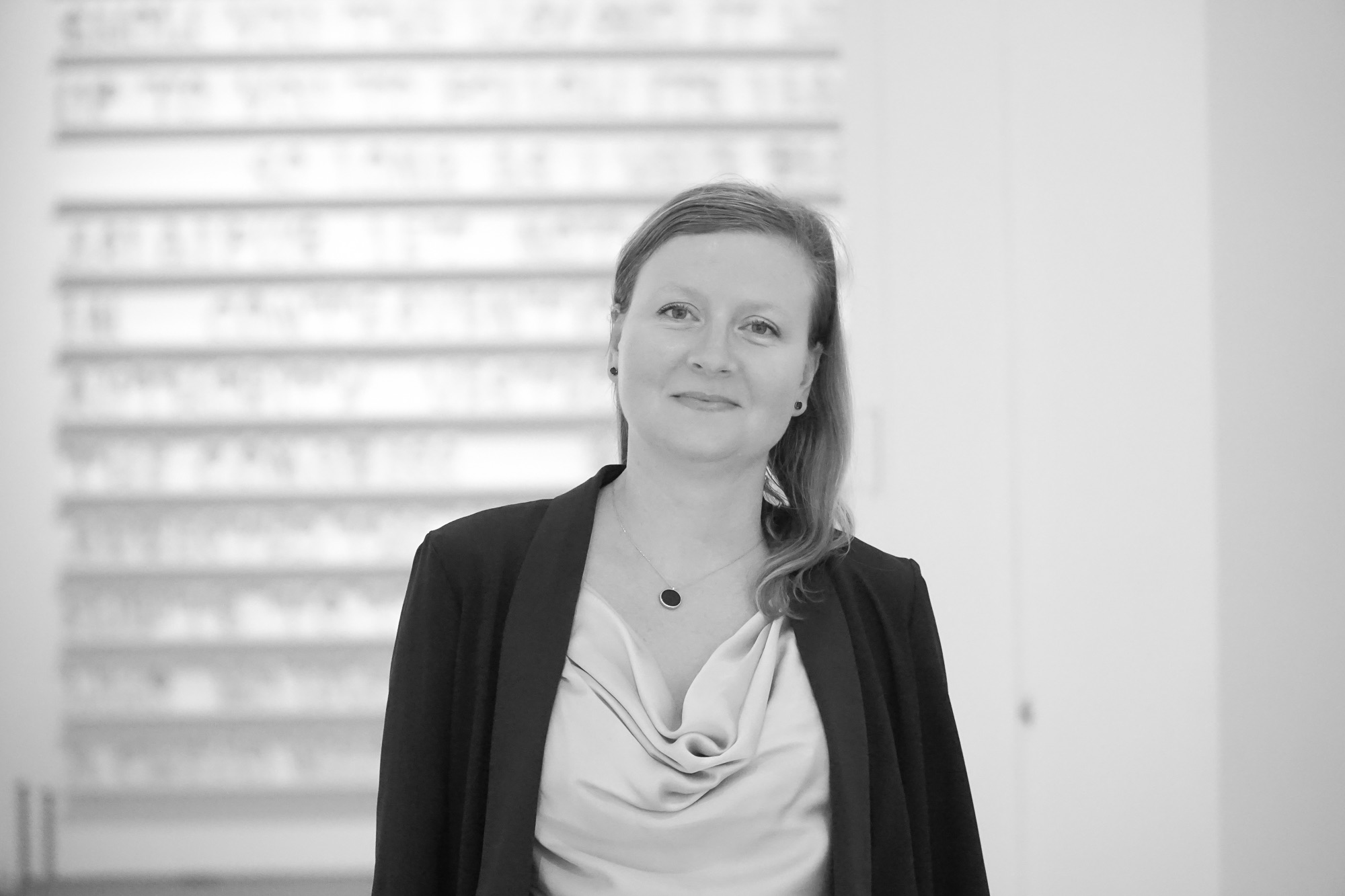
Ekaterina Heath is an art historian working on the movement of images and objects across empires in the eighteenth and nineteenth centuries. Her research spans Russian imperial visual and material culture, Inner Asian and Kalmyk history, and the transnational circulation of prints and propaganda. Her book, Women, Gardens, and Agency in Imperial Russia: Empress Maria Feodorovna's Pavlovsk Park, was recently published by Bloomsbury Academic.
Lucy Pittman
Lucy Pittman is a PhD candidate in the Department of Art History at the University of Sydney. Her thesis is currently titled “Pascal Coste in North Africa and Iran: Books, Buildings, Networks.” She is interested in new approaches to Orientalist visual culture and has recently researched the Ottoman reception of Byzantium and the role of this heritage in the early Tanzimat period, through a study of the 1839-42 restoration of the Hagia Sophia by the government of Sultan Abdülmecid.
Related
Thu, 10 September 2026
3:00PM
The forgotten Donald Brook: Sculptor of post-war humanism
Roger Benjamin
Thu, 29 October 2026
3:00PM
Material Marketing: How Canton Manufacturers Sold Embroidered Silk Shawls, 1800-1930
Maria Karageorge